
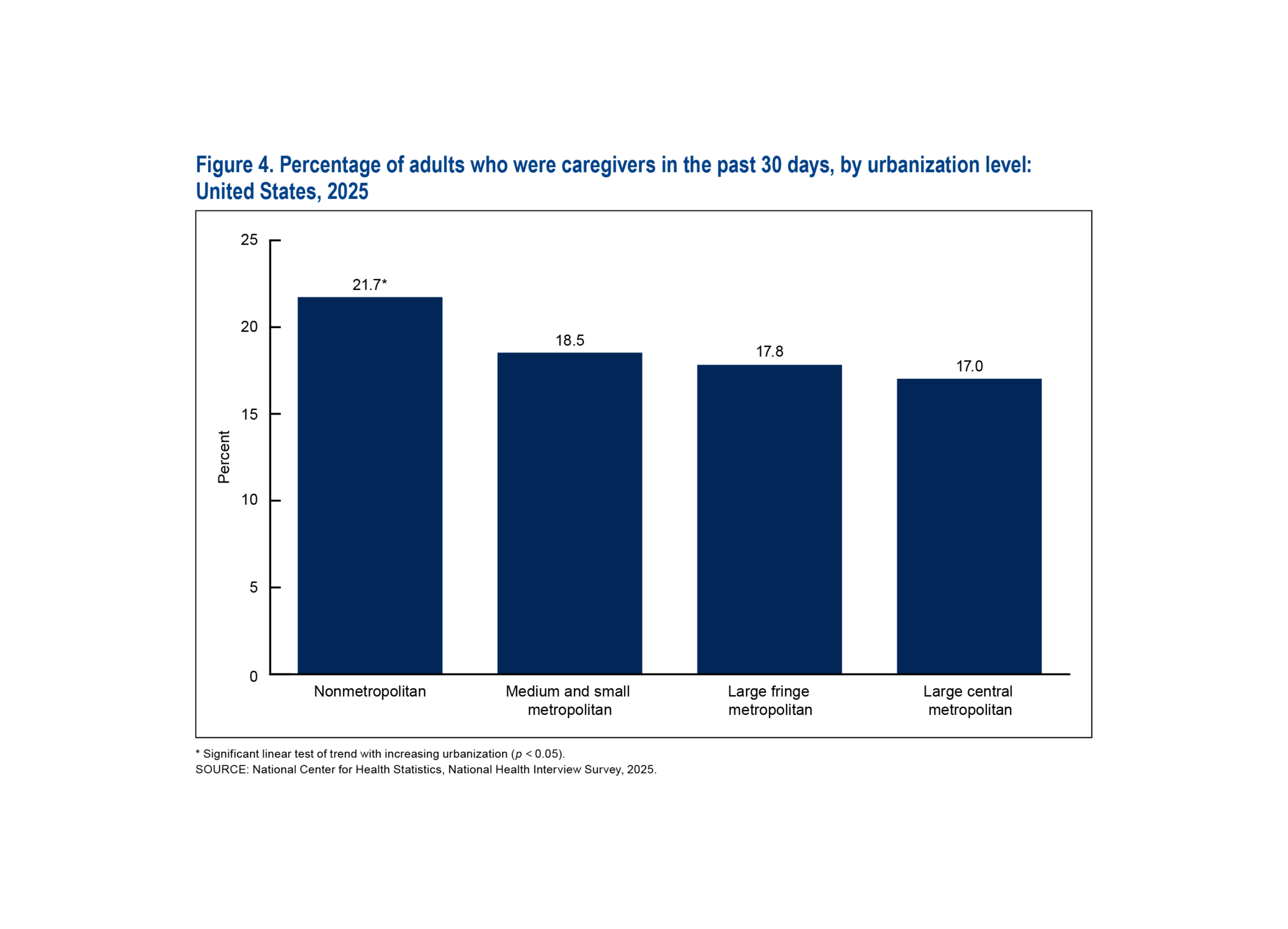
The National Center for Health Statistics brief, dated Nov. 17, estimates that 21.7% of adults in nonmetropolitan counties regularly helped a friend or relative with a health problem or disability in the previous 30 days. In the central counties of large metro areas, the estimate was 17.0%. That is a gap of 4.7 percentage points.
Nationally, the estimate was 18.3%, or about 47 million adults. The 2025 National Health Interview Survey analysis used adults’ own reports and represents the civilian U.S. population living outside institutions. The brief classifies geography by the caregiver’s county. It compares the share of adults providing care and leaves open how many hours they spent, where recipients lived and whether caregivers could get someone to fill in.
North Carolina offers an example of how to look for that help. Its Family Caregiver Support Program includes short-term respite, with services available to varying degrees across the state. Eligible groups include unpaid adults caring for someone age 60 or older or someone of any age with Alzheimer’s disease or a related disorder. The state page links to a provider directory for finding local services. Local providers can explain the additional rules for respite.
The separate North Carolina Lifespan Respite Program can reimburse eligible caregivers up to $750 per calendar year for respite services when funding is available. A local professional organization must refer the caregiver and submit the application. The person receiving unpaid care can be any age. Generally, neither the caregiver nor the recipient can already be receiving ongoing publicly funded in-home services or other respite care. The state says people on waiting lists for publicly funded in-home or respite services can qualify, subject to the other eligibility rules.
For a caregiver who needs someone to take over for a few hours, the practical question is which local provider can help and when. The state’s program comparison shows why it is worth asking about both routes. The family caregiver program varies by county, while the lifespan voucher has its own application and reimbursement process.