
If you keep your family photos or office files on a Synology drive, open its update screen and write down the full software build. The Cybersecurity and Infrastructure Security Agency added CVE-2024-10441 to its Known Exploited Vulnerabilities catalog on November 18. Synology says the flaw can let a remote attacker run code on affected versions of DiskStation Manager (DSM) and BeeStation OS. The company already published fixes in its DSM advisory and BeeStation advisory.
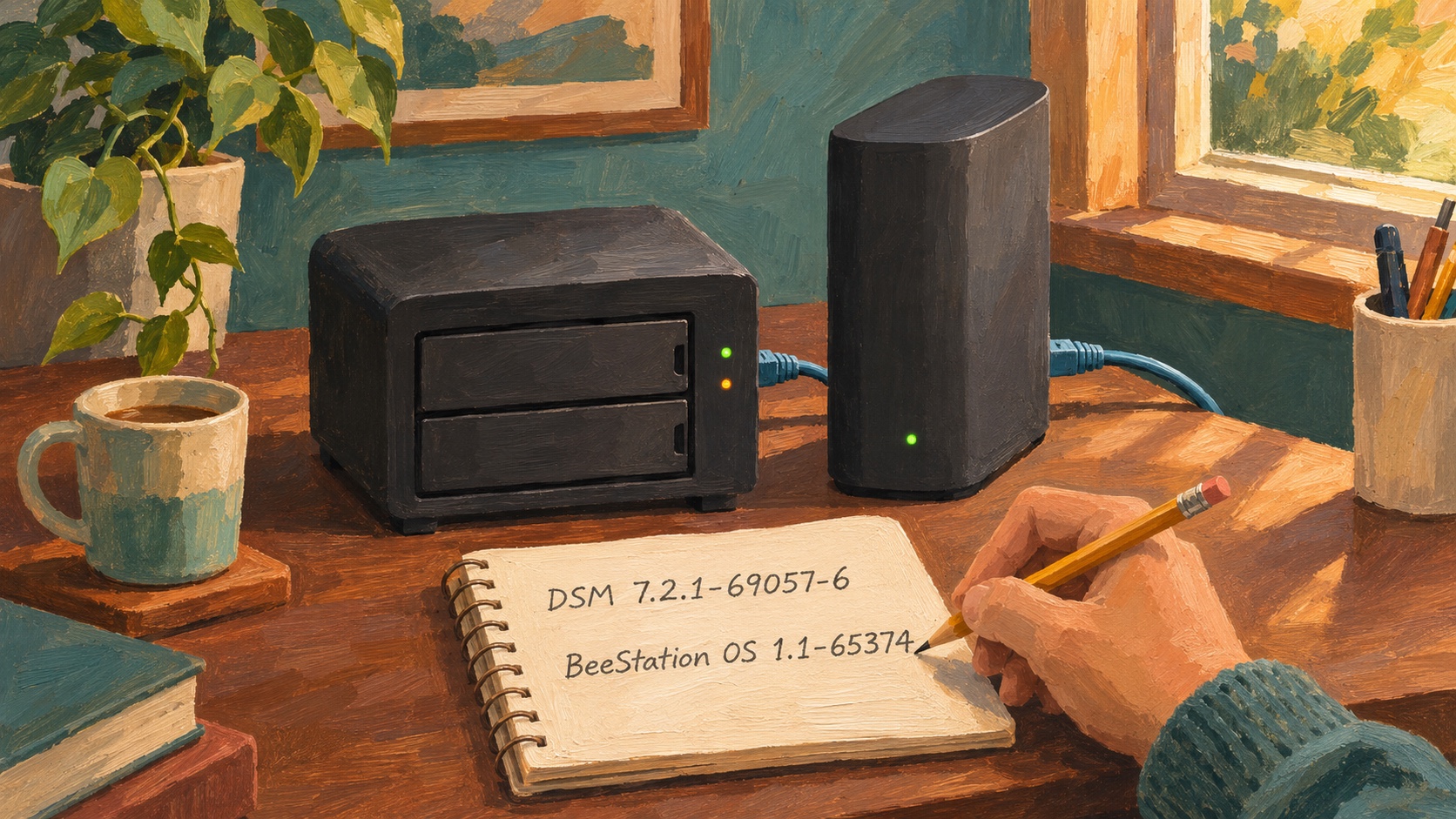
DiskStation Manager. Open Control Panel → Update & Restore. Compare the installed build with the fix for your release line. For DSM 7.2.2, the advisory gives 7.2.2-72806-1 as the minimum fixed build. For DSM 7.2.1, it gives 7.2.1-69057-6. For DSM 7.2, it gives 7.2-64570-4. If you’re starting from an older release, Synology’s upgrade guide shows how to look up the newest version your model supports and whether you need intermediate updates.
BeeStation. Look for 1.1-65374 or later, the threshold in the BeeStation advisory. Synology’s BeeStation Plus manual puts the installed version under System Settings → Update. After updating either device, open the update screen again and record the installed build.
CISA set a November 21 remediation deadline under a directive that applies to federal civilian executive branch agencies. The catalog entry also calls for forensic triage. For a household or business, the listing gives a reason to move this check up the list. The build number helps answer whether the fix is installed. Reviewing a device for signs of earlier compromise is a separate job.
In an October 29 warning, Synology said attackers were targeting outdated DSM devices to encrypt data and demand ransom. It pointed to an advisory that covers three flaws and gave no CVE number for the attacks. CISA lists ransomware use for CVE-2024-10441 as unknown.