
A city seeking the smallest award in the new federal congestion relief round would need a project with at least $12.5 million in eligible costs. At that floor, the Federal Highway Administration’s funding notice sets up a funding split of $10 million in federal funding and $2.5 million from nonfederal sources. The nonfederal share can come from state or local revenue or private funds. Under the notice’s cost-sharing rules, applicants cannot count money they have already spent or committed toward the match.
The new round offers up to $100 million from fiscal years 2025 and 2026, subject to funding availability. The federal listing shows that the application opened November 17. States, metropolitan planning organizations and cities or municipalities can apply for projects in urbanized areas with more than 1 million residents. The threshold applies to the urbanized area where the project would take place.
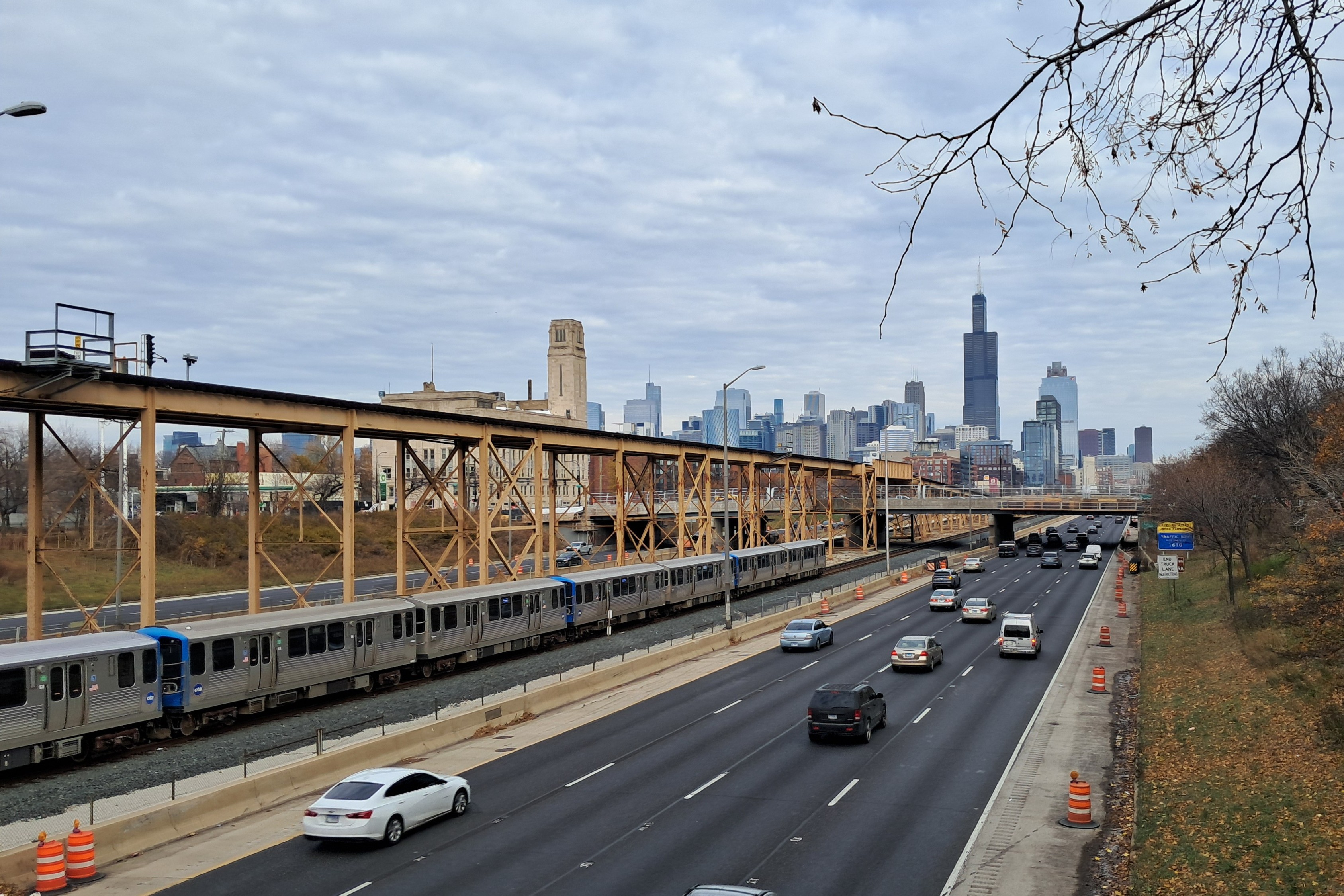
The previous round’s award list shows why a highway congestion program can matter to train riders. The Illinois Department of Transportation was listed for a $15.8 million award for investigations and design work on the Chicago Transit Authority’s Forest Park Branch, a rail alternative to a parallel interstate. This round’s notice also allows proposals for services such as commuter buses and on-demand transit. A proposal can cover planning, design, implementation or construction.
Applications are due December 17 at 11:59 p.m. Eastern, and the notice says the department expects to announce selections in early 2027. The Federal Highway Administration’s program page is where to look for the list. After selection comes a grant agreement. Federal payments generally follow eligible expenses and a valid reimbursement request.
Cover photo by AlphaBeta135 via Wikimedia Commons, CC BY 4.0. Publication copy has stripped camera metadata; some previews may crop the frame.