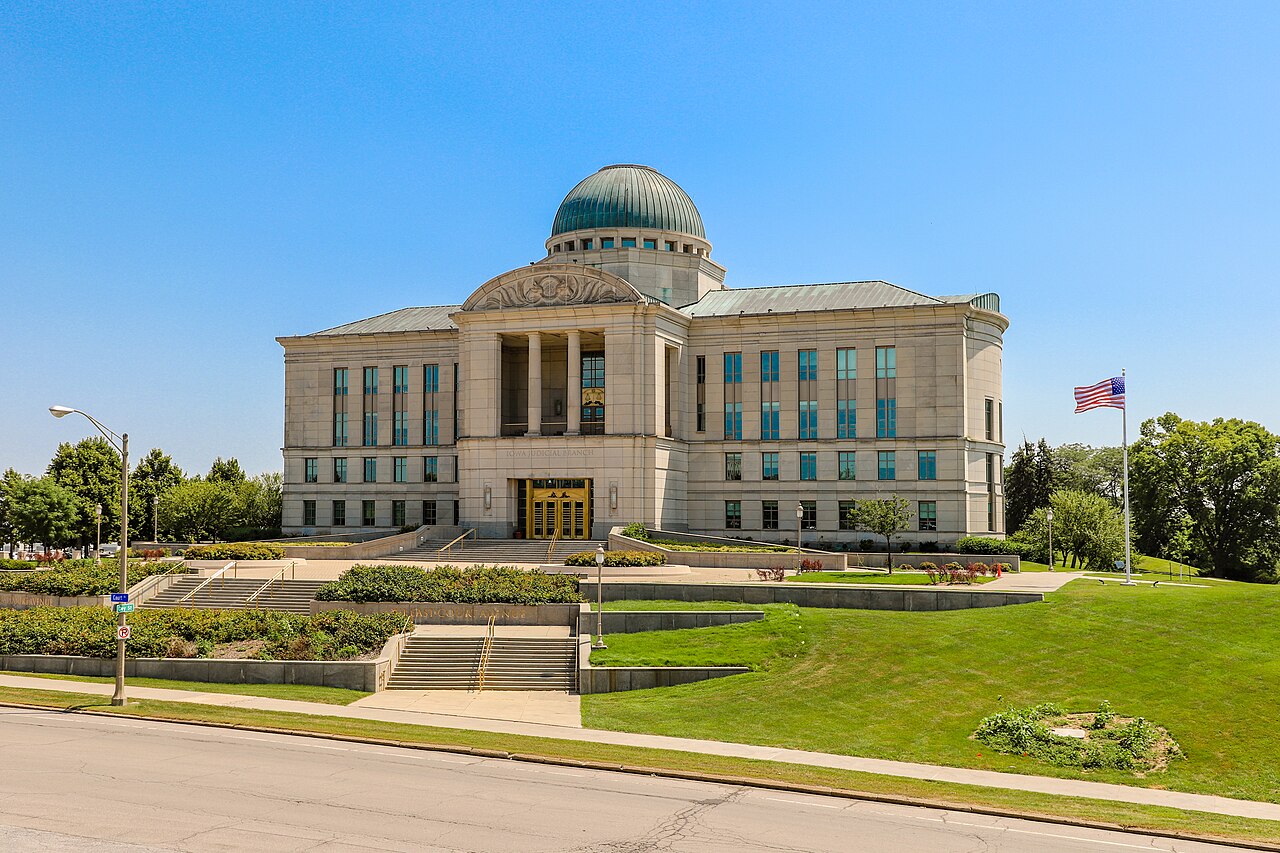
Two former Iowa Department of Transportation employees and their union can ask a district judge to review the dismissal of their labor complaint under Iowa’s Administrative Procedure Act. The Iowa Supreme Court ruled unanimously on November 20, rejecting the state’s argument that Iowa’s public-sector labor statute barred that form of review.
The dispute began after the two employees lost their jobs in spring 2024. They asked AFSCME Iowa Council 61 to represent them at a grievance meeting. Iowa’s Department of Administrative Services denied the request, according to the court’s account. The union and employees filed a prohibited-practice complaint, and the Employment Appeal Board dismissed it in March 2025 after finding that the state had committed no prohibited practice. Friday’s ruling leaves the Polk County District Court free to review that dismissal. Whether the state had to allow union representation at the meeting remains to be decided.
The decision turns on two sentences in Iowa Code section 20.34. The first specifies whom to name in a petition for review of a contested case. The second broadly excludes board actions under the public-sector labor law from chapter 17A review. The justices read the first sentence as a specific exception that preserves chapter 17A review for contested cases.
That reading affects both the route to court and the name on the petition. Chapter 17A generally calls for naming the agency. In a contested case covered by section 20.34, the opposing party is the respondent and the Employment Appeal Board stays off the petition. In this case, the union and employees named the State of Iowa. Case background
Archive photo by Paul R. Burley, CC BY-SA 4.0. Display crops may vary.
