
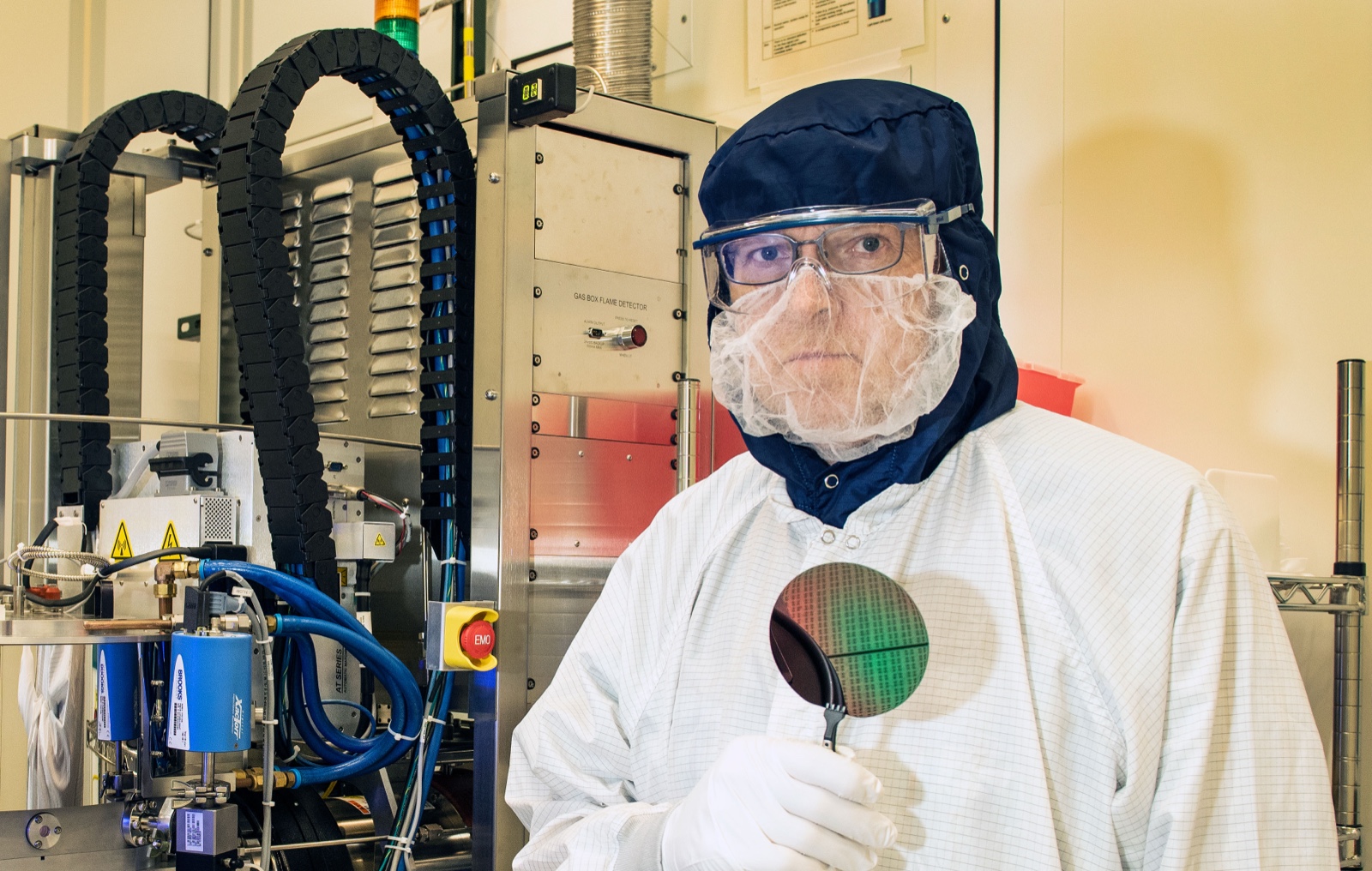
The U.S. Commerce Department announced on November 24 that it had signed a CHIPS and Science Act research award of up to $38 million for Diraq. The ceiling matches the amount Commerce outlined in May, when the funding was still proposed under a letter of intent. Diraq says the award will support U.S. capabilities to make and test silicon quantum processor chips.
Commerce identifies three targets for the research: quantum logic units that can scale up, new arrangements of qubits and ways to control qubits across a system. The award announcement describes the engineering work the government is backing. It gives no performance results for a processor built under the award.
What four devices could show
In a 2025 study in Nature, researchers tested four devices built at imec on a 300-millimeter wafer using standard semiconductor tools. Each device held two qubits, the units that store quantum information. The measured accuracy of one- and two-qubit control operations exceeded 99 percent on all four devices. The authors chose one design they expected to perform well from a wafer containing several designs. That makes the result a test of how consistently the selected design performed across four samples. Estimating production yield would require a representative sample of devices made to the same specifications and a defined pass criterion.
What DARPA will test separately
Diraq is also in the final stage of DARPA’s Quantum Benchmarking Initiative. The agency’s evaluators will work with the company to test whether its proposed system can be built as designed and operate as intended. The program asks whether any of the approaches under review can reach a scale where the value of the computation exceeds its cost by 2033. That is a test of a whole system. The chip study measured individual operations on small devices, and the Commerce award funds research to help bridge the gap.