
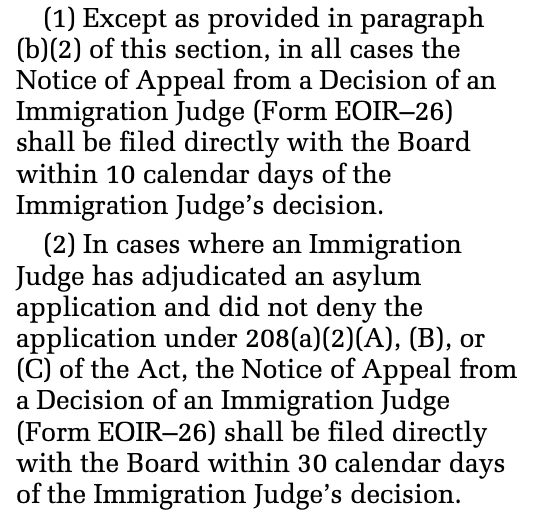
A person whose asylum application was denied could have 30 days to appeal. Another person could have just 10, even if the judge in both cases weighed the risk of persecution. Under a final rule published November 17, the difference can turn on whether the judge also found that the applicant had missed the one-year asylum filing deadline.
The Justice Department says the rule takes effect December 17, 2026, and applies the shorter notice deadline prospectively to decisions issued on or after that date. For most immigration judge decisions covered by the rule, the notice of appeal, Form EOIR-26, must be filed with the Board of Immigration Appeals within 10 calendar days instead of 30. Under the filing provision adopted from the February rule, the clock generally starts when the judge states an oral decision or when a written decision is mailed or sent electronically. If the last day falls on a Saturday, Sunday or legal holiday, the deadline moves to the next business day.
The asylum exception turns on three grounds for denial: a safe third country agreement, the one-year filing bar or a prior asylum denial. If the judge applies one of those bars, the 10-day deadline applies even when the judge also gives a separate reason for denying asylum on the merits. The department gives the example of a judge who finds that an application was filed too late and also finds no well-founded fear of future persecution. If the judge adjudicates asylum and does not deny it on any of the three specified grounds, the 30-day window applies to the entire case, including any accompanying claims for protection from removal.
A federal district court order set aside the shorter deadline and two other provisions of the interim rule in March. The Justice Department says the new final rule addresses the court’s procedural objection because it followed a public comment process. The November publication sets a future effective date. For someone reading a decision, the two details to check are when the judge issued it and, in an asylum case, which grounds the judge actually relied on.