
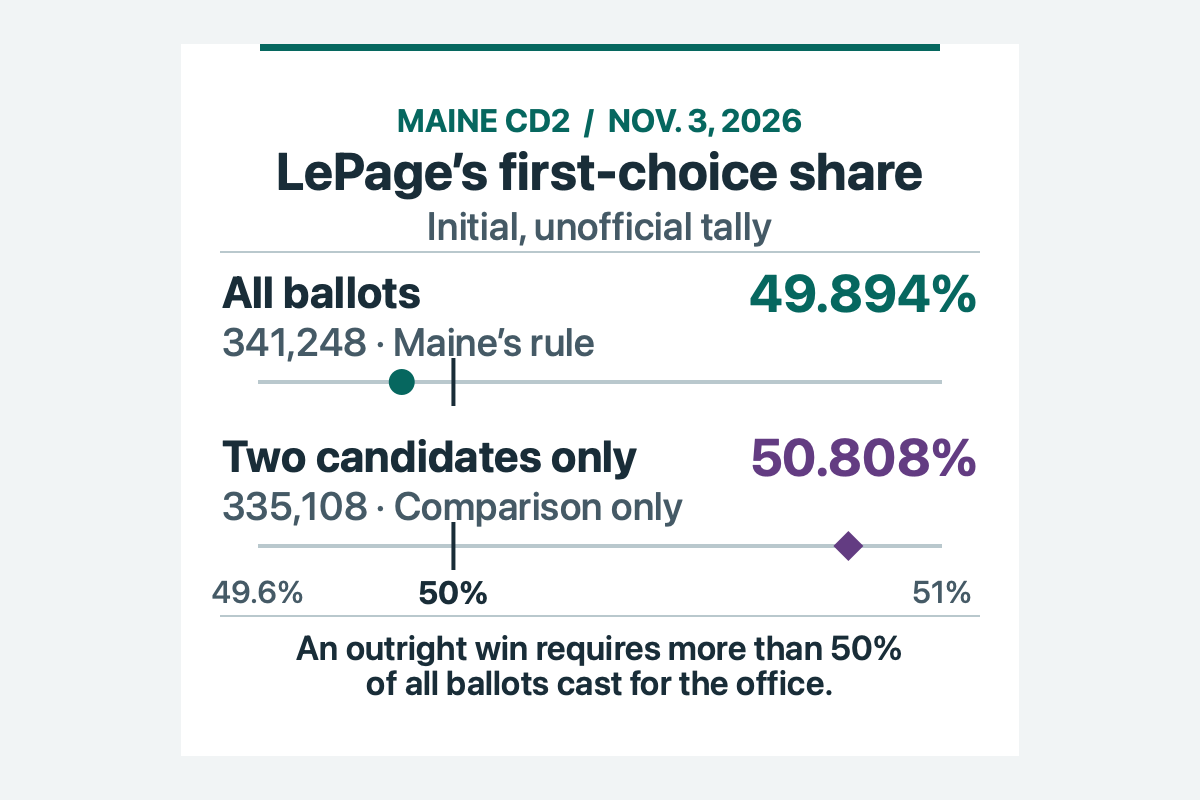
Paul LePage was 362 first-choice votes short of winning Maine’s 2nd Congressional District outright, based on the state’s unofficial tally. Democrat Matt Dunlap conceded on Nov. 5, but Maine election officials began verifying the district’s returns in Augusta on Monday, Nov. 9, as part of the ranked-choice count.
The difference comes down to which ballots count toward a majority. Maine requires more than half of all ballots cast for the office to rank a candidate first for that candidate to win outright. That includes ballots with a blank first choice. In the state’s initial count, Republican LePage had 170,263 first choices and Dunlap had 164,845. Declared write-in candidates received 123 first choices, and 6,017 ballots had a blank first choice. With 341,248 ballots in that tally, the smallest outright majority was 170,625.
Divide LePage’s count by all 341,248 ballots and he had 49.894%. Divide it by just the votes for LePage and Dunlap and he had 50.808%. That second figure shows how much the denominator matters, but it’s neither the test Maine uses to decide whether to count rankings nor a forecast of the final result.
The state said it would check municipal totals first. If the verified first choices still leave everyone short of an outright majority, Maine law calls for counting in rounds. Each ballot still in play goes to its highest-ranked candidate still in the race. A ballot with no remaining candidate ranked drops out, so the final tally can have a different denominator. When two or fewer candidates remain, the one with the most votes wins, subject to the law’s tie rules.
The Secretary of State’s results page is where voters can look for the state’s count. Maine law also requires the office to post the complete cast vote record once certified results are reported. That record will show the rankings behind the result; the Nov. 5 totals show only how the race stood before the state began verifying returns.